
Piano Transcription As Critical Commentary
A transcription is the process of converting a musical performance into a symbolic representation, such as sheet music or an audio file. Piano transcription is an important skill that musicians need to learn, whether they’re working on a score for a classical piece, a jazz improvisation, or even their own original compositions. Piano transcription can be viewed as a type of critical commentary, since the work can often reveal interesting aspects about the piece being transcribed, as well as the pianist performing it.
Transcription is an art as well as a skill, and it requires the attention of a professional musician. The goal of a transcription is to notate the notes that are heard in a musical passage, while maintaining the phrasing and dynamics of the performance. In addition, a good transcription should also capture the expressive aspects of the performance, such as vibrato and articulation. The skill of a piano transcriber is to combine these elements into a notation that will be understandable to the average music listener.
Piano transcription is often seen as an extension of the art of piano playing itself, since the ability to improvise and play music by ear is considered a hallmark of the skill set that every classical pianist should master. In addition, piano transcription can be used as a means of evaluating a pianist’s performance and abilities, as it can provide a glimpse into the creative process that goes into creating an outstanding artistic performance.
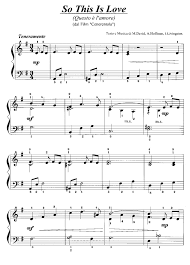
The Art of Piano Transcription As Critical Commentary
The art of piano transcription can be applied to other genres of music as well, such as jazz and opera. It can be especially useful in analyzing performances of a particular composer, as it allows the musician to compare the interpretation with the composer’s own version of the work and see how close the performer came to achieving the composer’s intentions.
In the case of an opera, a piano transcription can be a helpful tool in comparing a composer’s original scores with the final version of a particular opera, allowing the pianist to see how the composer altered his or her musical ideas as the production developed.
An example of a critical commentary is an article that analyzes the logical soundness and soundness of different arguments presented by various sources. This is usually done by assessing how well each argument is supported by evidence and how logically the conclusions flow from each argument. In addition, it may be necessary to evaluate how well the argument withstands challenges or contradictions from other arguments.
A common form of criticism is the point/counterpoint approach, where two arguments are compared and contrasted in order to demonstrate which position musters the best support and exhibits a more convincing line of reasoning. Critical commentary can be found in books, newspapers, magazines and websites, and can be used to address controversial issues in any field. A good piece of critical commentary is one that is backed up with strong research, thoughtful argumentation and persuasive evidence, making it difficult for readers to disagree or find fault with the writer’s conclusion.