
circuit board assembly services
Circuit card assembly manufacturers face increasing demands for thinner and more compact electronic devices, driving innovation in the design and fabrication of thin circuit cards. The question of how thin circuit card assembly manufacturers can be is multifaceted, involving considerations such as material properties, manufacturing processes, and performance requirements.
Traditionally, circuit cards have been relatively thick, with standard thicknesses ranging from 0.062 inches (1.57 mm) for rigid boards to 0.002 inches (0.05 mm) for flexible circuits. However, advancements in materials and manufacturing technologies have enabled manufacturers to produce thinner circuit cards with reduced form factors while maintaining performance and reliability. For example, flexible circuit boards made of polyimide or polyester films can be as thin as 0.001 inches (0.025 mm), allowing them to bend and conform to complex shapes without sacrificing electrical conductivity or mechanical strength.
One of the key factors influencing the thickness of circuit card assembly manufacturers is the choice of substrate material. Rigid circuit boards are typically made of fiberglass-reinforced epoxy resins, which offer excellent mechanical strength and thermal stability but tend to be thicker and less flexible. In contrast, flexible circuit boards are made of thin, lightweight materials such as polyimide or polyester films, which can be laminated together to achieve the desired thickness and flexibility. Manufacturers may also use specialized materials such as liquid crystal polymer (LCP) or thin-film ceramics to produce ultra-thin circuit cards for specific applications requiring extreme miniaturization.
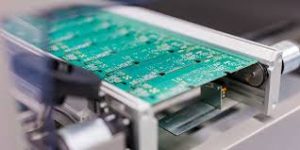
How are components verified for compatibility during circuit board assembly services?
Manufacturing processes also play a crucial role in determining the thickness of circuit cards. Traditional subtractive manufacturing techniques, such as etching and milling, involve removing excess material from a substrate to create the desired circuit pattern, limiting the achievable thickness of the final board. However, additive manufacturing technologies, such as inkjet printing and direct laser writing, enable manufacturers to build up layers of material to create ultra-thin circuit cards with precise features and complex geometries. These additive manufacturing processes offer greater flexibility and control over the thickness and design of the circuit card, opening up new possibilities for thin and flexible electronics.
Performance requirements are another important consideration when determining how thin circuit card assembly manufacturers can be. Thinner circuit cards may offer advantages such as reduced weight, improved thermal management, and increased space efficiency, making them ideal for applications where size, weight, and power (SWaP) are critical factors. However, thinner boards may also be more susceptible to mechanical stress, thermal cycling, and environmental factors such as humidity and vibration, which can affect performance and reliability. Manufacturers must carefully balance these competing requirements to ensure that the thickness of the circuit card meets the needs of the intended application without compromising functionality or durability.
In conclusion, circuit card assembly manufacturers have the capability to produce increasingly thin and compact electronic devices thanks to advancements in materials, manufacturing technologies, and design techniques. The thickness of circuit cards can vary depending on factors such as substrate material, manufacturing process, and performance requirements, with flexible circuit boards offering greater flexibility and versatility compared to rigid boards. By leveraging these advancements, manufacturers can meet the growing demand for thinner and more compact electronic devices while maintaining performance, reliability, and functionality in a wide range of applications.